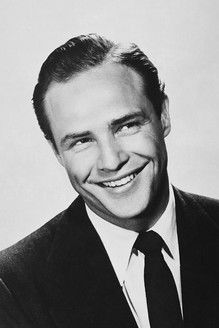
Marlon Brando
Biography
Marlon Brando Jr. (April 3, 1924 – July 1, 2004) was an American actor. Considered one of the most influential actors of the 20th century, he received numerous accolades throughout his career which spanned six decades, including two Academy Awards, two Golden Globe Awards, and three British Academy Film Awards. Brando was also an activist for many causes, notably the civil rights movement and various Native American movements. Having studied with Stella Adler in the 1940s, he is credited with being one of the first actors to bring the Stanislavski system of acting and method acting, derived from the Stanislavski system, to mainstream audiences. He initially gained acclaim and his first Academy Award nomination for Best Actor in a Leading Role for reprising the role of Stanley Kowalski in the 1951 film adaptation of Tennessee Williams' play A Streetcar Named Desire, a role that he originated successfully on Broadway. He received further praise, and a first Academy Award and Golden Globe Award, for his performance as Terry Malloy in On the Waterfront, and his portrayal of the rebellious motorcycle gang leader Johnny Strabler in The Wild One proved to be a lasting image in popular culture. Brando received Academy Award nominations for playing Emiliano Zapata in Viva Zapata! (1952); Mark Antony in Joseph L. Mankiewicz's 1953 film adaptation of Shakespeare's Julius Caesar; and Air Force Major Lloyd Gruver in Sayonara (1957), an adaptation of James A. Michener's 1954 novel. The 1960s saw Brando's career take a commercial and critical downturn. He directed and starred in the cult western One-Eyed Jacks, a critical and commercial flop, after which he delivered a series of notable box-office failures, beginning with Mutiny on the Bounty (1962). After ten years of underachieving, he agreed to do a screen test as Vito Corleone in Francis Ford Coppola's The Godfather (1972). He got the part and subsequently won his second Academy Award and Golden Globe Award in a performance critics consider among his greatest. He declined the Academy Award due to alleged mistreatment and misportrayal of Native Americans by Hollywood. The Godfather was one of the most commercially successful films of all time, and alongside his Oscar-nominated performance in Last Tango in Paris (1972), Brando reestablished himself in the ranks of top box-office stars. After a hiatus in the early 1970s, Brando was generally content with being a highly paid character actor in supporting roles, such as Jor-El in Superman (1978), as Colonel Kurtz in Apocalypse Now (1979), and Adam Steiffel in The Formula (1980), before taking a nine-year break from film. According to the Guinness Book of World Records, Brando was paid a record $3.7 million ($16 million in inflation-adjusted dollars) and 11.75% of the gross profits for 13 days' work on Superman. Brando was ranked by the American Film Institute as the fourth-greatest movie star among male movie stars whose screen debuts occurred in or before 1950. He was one of only six actors named in 1999 by Time magazine in its list of the 100 Most Important People of the Century. In this list, Time also designated Brando as the "Actor of the Century".
Movies
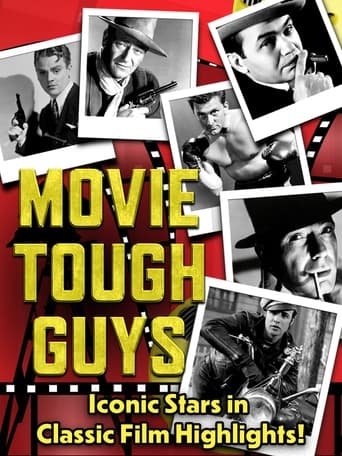
Movie Tough Guys
1991

Ballybrando
2009
The Godfather Trilogy: 1901-1980
1992
The Godfather: The Complete Epic 1901–1959
2016
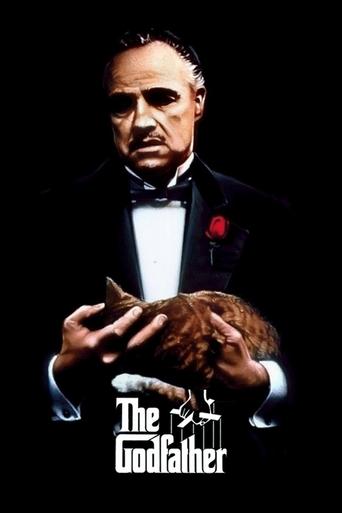
The Godfather
1972
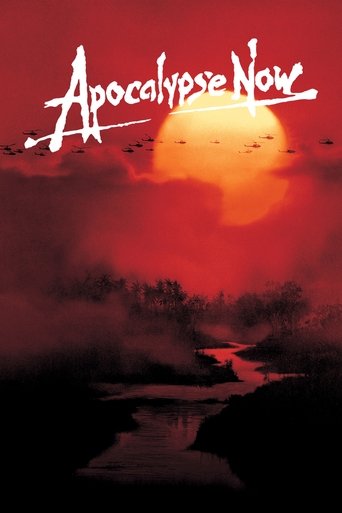
Apocalypse Now
1979
Martin Scorsese, the Italian-American Master
2024
Michael Jackson: 30th Anniversary Celebration
2001
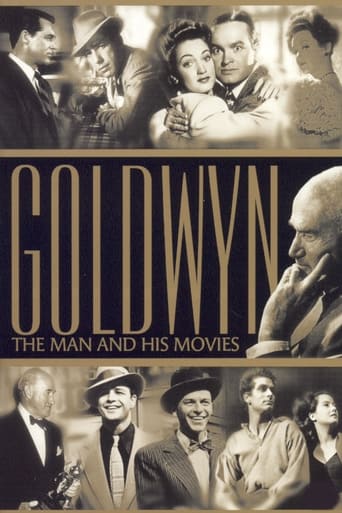
Goldwyn: The Man and His Movies
2001
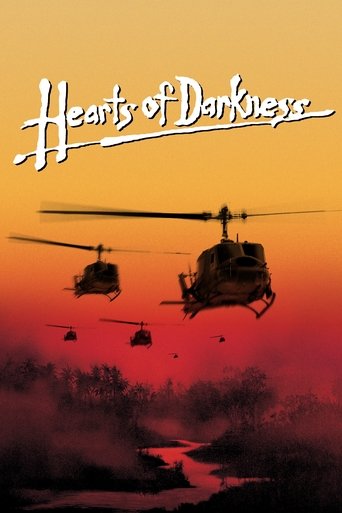
Hearts of Darkness: A Filmmaker's Apocalypse
1991

On the Waterfront
1954
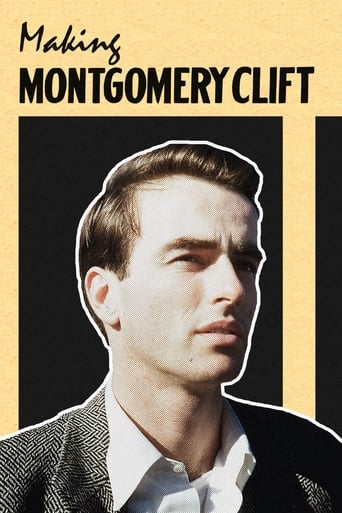
Making Montgomery Clift
2018
TV Shows
Final Days of an Icon
2007

Vow of Silence: The Assassination of Annie Mae
2024
Mario Puzo's The Godfather: The Complete Novel for Television
1977
E! True Hollywood Story
1996
Cinépanorama
1956

Roots: The Next Generations
1979
The Sixties
2014
The Oscars
1953
The Dick Cavett Show
1968
The Ed Sullivan Show
1948
The Mike Douglas Show
1961
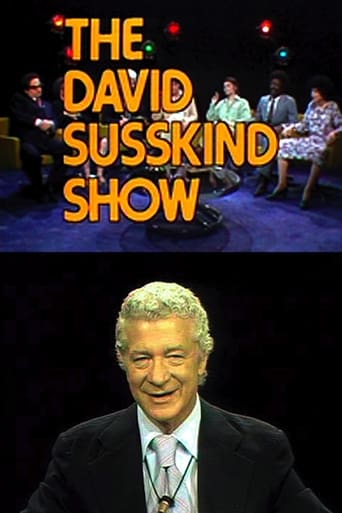
The David Susskind Show
1959